Spanish Christmas traditions offer more than seasonal colour and festive atmosphere. They reveal how homes are used, how families gather and how communities create a sense of belonging. For people buying, selling, owning or moving to Spain, understanding these customs can make everyday life feel more natural and help shape practical property decisions.
Christmas in Spain is often a long, social season rather than a single day. Family meals, nativity scenes, neighbourhood decorations, public celebrations and the arrival of the Three Kings all form part of a wider rhythm. Whether you own a permanent home, use a property for holidays or are planning a move, these traditions can influence everything from dining space and guest accommodation to heating, lighting and outdoor living.
This guide explores some of the best-known Spanish Christmas customs and considers what they can teach property buyers and owners about enjoying life in Spain throughout the year.
Why Spanish Christmas traditions matter to property life
Buying a home in Spain is not only a decision about bedrooms, terraces or proximity to amenities. It is also a decision about the type of lifestyle you want to create. Seasonal traditions can help you imagine how a property will work when family and friends visit, when local streets become busier and when daily routines change for celebrations.
A compact apartment may be ideal for quiet winter escapes, while a townhouse or villa with a generous dining area could be better suited to regular family gatherings. A home with a covered terrace may allow you to continue eating outdoors during mild winter afternoons, while a well-insulated interior becomes especially valuable during cooler evenings.
For anyone considering a purchase, it can be useful to think beyond the initial viewing. Ask how the property will function during festive periods, school holidays and visits from relatives. The answer may affect your preferred location, layout, storage needs and ownership budget.
At RB Casas, the wider Spanish property search can be considered alongside the lifestyle you want to build, including how you expect to use your home during important family and community occasions.
Nochebuena: the importance of the Christmas Eve gathering
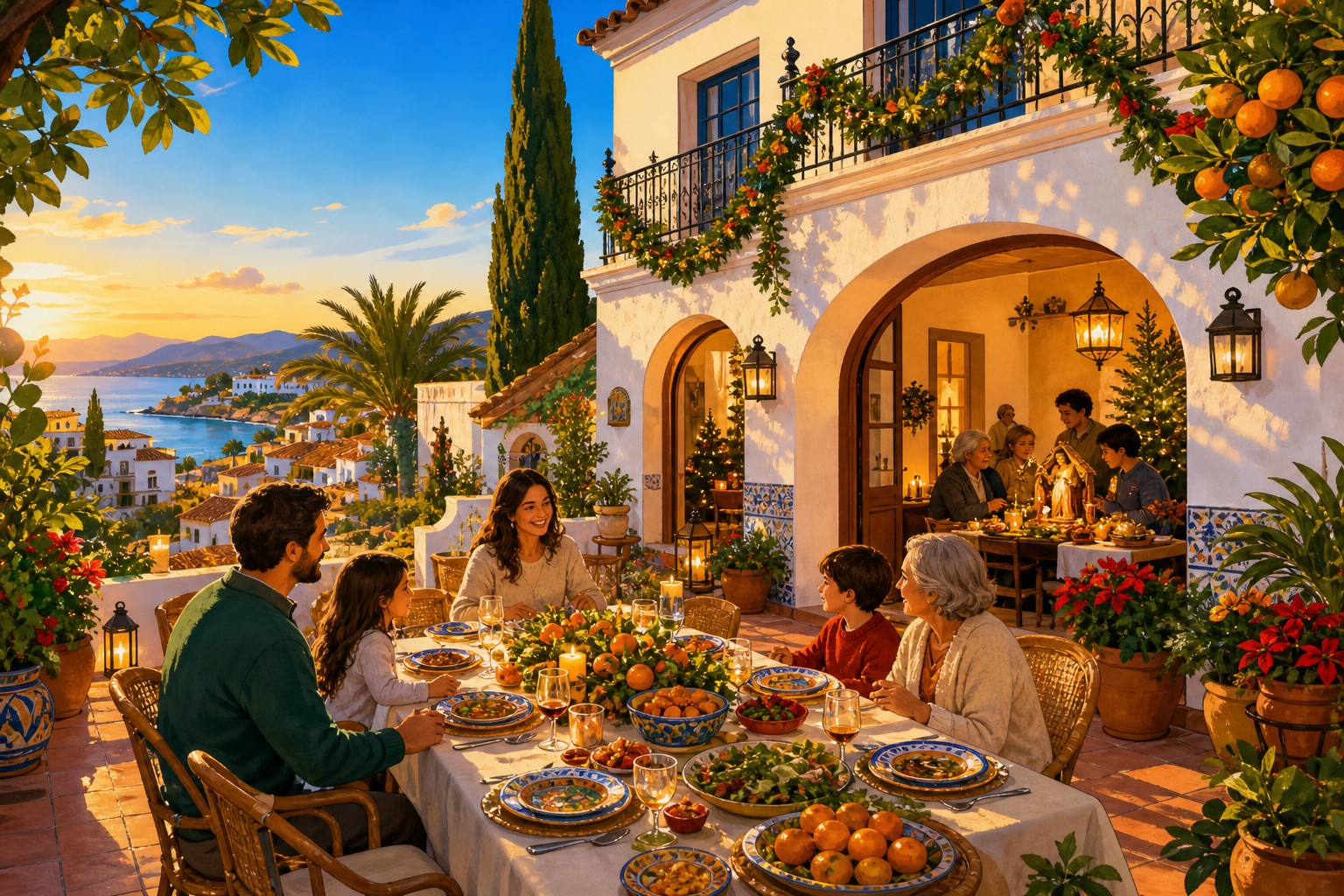
Christmas Eve, known as Nochebuena, is one of the most important family occasions in Spain. Many households gather for a substantial evening meal, often lasting several hours and followed by conversation, music or a late-night religious service. The emphasis is usually on togetherness rather than a rushed meal.
This tradition highlights the value of a practical dining and entertaining space. An open-plan kitchen and living area can make it easier for the person preparing food to remain part of the gathering. A separate dining room may suit larger formal meals, while a spacious terrace can provide additional flexibility in warmer parts of the country.
Property features that support festive hosting
- A usable dining area: Measure the space for the table you would realistically use, including room for chairs to move comfortably.
- Kitchen storage: Festive meals often require more cookware, serving dishes and tableware than everyday life.
- Guest flexibility: A second bedroom, sofa bed or adaptable study can make family visits easier.
- Comfortable evening areas: Check how the home feels after sunset, including lighting, draughts and heating.
- Outdoor options: A covered terrace or sheltered patio can extend the useful living space during mild weather.
Even if you do not plan to host a large Christmas meal, these features can remain useful throughout the year. A property that works for a family celebration may also be better suited to birthdays, summer visitors, shared meals and remote-working guests.
Nativity scenes and the character of the Spanish home
Nativity scenes, or belenes, are an important part of Christmas decoration in many Spanish households. Some are simple displays, while others become detailed scenes incorporating landscapes, villages, water features, animals and figures representing traditional rural life.
For property owners, the popularity of the belén reflects a broader appreciation for personal decoration and seasonal rituals. A home does not need to be large to accommodate a festive display, but it helps to have a suitable surface, sideboard, shelving area or secure storage space.
Storage is easily overlooked when buying a property in Spain. Many homes have limited cupboards, particularly in apartments designed for holiday use. If you enjoy decorating for Christmas or hosting visitors, consider where lights, ornaments, artificial trees, table settings and outdoor furnishings will be kept during the rest of the year.
Built-in cupboards, a utility room, a lockable store room or a garage can make a noticeable difference. Before buying, inspect storage areas carefully rather than assuming that unused corners will be sufficient.
Christmas lights, balconies and community atmosphere
During the festive season, Spanish towns and cities often become more visually expressive. Streets, squares and public buildings may be decorated with lights, while balconies and windows are given a personal touch. For residents, this can create a strong sense of community and make familiar streets feel different for several weeks.
For apartment buyers, communal rules may be relevant if you want to place lights, decorations or planters on a balcony or terrace. Some communities have clear expectations about external alterations, fixings, visible wiring and the use of shared spaces. It is sensible to ask about these matters before committing to a purchase.
Balcony orientation can also affect the experience of festive evenings. A terrace that receives afternoon sun may be pleasant for winter drinks, while a shaded or exposed balcony may be less comfortable. Look at wind exposure, privacy and access to power points as well as the view.
External decorations should be installed safely and without creating trip hazards, water ingress or damage to communal façades. Where a property is part of a community, confirm any relevant rules with the administrator or owners’ association rather than relying on informal assumptions.
The Three Kings and the extended Spanish Christmas season
One of the most distinctive Spanish Christmas traditions is the arrival of the Three Kings, or Reyes Magos. In many families, children receive gifts around the Feast of the Epiphany in January, meaning that the festive period continues beyond Christmas Day and New Year.
This longer season can be especially meaningful for people who move to Spain with children. Local celebrations, parades and community events may become important parts of family life, helping newcomers meet neighbours and understand the area’s traditions.
From a property perspective, a longer festive season can also affect practical planning. If your home is used as a second residence, decide in advance whether it will be occupied during the winter holidays. If it is left empty, arrange for someone to check the property, manage post, monitor water or electricity problems and respond to unexpected maintenance issues.
Preparing a second home for the winter festive period
- Confirm that doors, windows, shutters and security systems are working correctly.
- Check for signs of damp, leaks or storm damage before leaving the property unoccupied.
- Arrange a trusted local contact for urgent issues.
- Review utility settings and avoid switching off systems that need to remain operational.
- Keep important documents and emergency contacts accessible to anyone managing the home.
- Make sure outdoor furniture, loose decorations and plant pots are secure.
These steps are useful at any time of year, but they become particularly important when a property is empty during a period when tradespeople, offices or local services may operate on altered schedules.
New Year in Spain: grapes, gathering and practical home design
New Year’s Eve, or Nochevieja, is commonly celebrated with a family or friends’ gathering followed by the tradition of eating twelve grapes at midnight. Each grape is associated with one of the clock’s chimes, creating a lively and sometimes humorous shared ritual.
The tradition is a reminder that homes do not need to be formally designed for entertaining to support memorable occasions. A comfortable sitting room, a practical kitchen and enough space for people to move around can be more valuable than a highly decorated but awkward layout.
When viewing a property, consider how people will circulate between the kitchen, dining area, lounge and outside space. Look for narrow doorways, poorly positioned furniture, limited ventilation or rooms that become uncomfortable when several people are present.
Lighting also matters. Layered lighting, including ceiling fixtures, lamps and practical kitchen illumination, can help a home feel welcoming during darker winter evenings. If you are considering improvements after buying, lighting upgrades are often a relatively straightforward way to improve comfort without changing the entire layout.
Spanish food traditions and the value of a practical kitchen
Festive food varies between regions and families, but Christmas in Spain is strongly associated with long meals, shared dishes and special sweets. This places the kitchen at the centre of the home, even where the main celebration takes place in a separate dining or living area.
For buyers, the visual appearance of a kitchen should not be the only consideration. Check worktop space, ventilation, cupboard condition, appliance age, water pressure and the location of electrical sockets. A beautiful kitchen may be frustrating if there is nowhere to prepare food or store serving equipment.
If you plan to modernise a property, prioritise improvements that support the way you will actually live. Better storage, efficient ventilation, durable surfaces and improved lighting may provide more practical value than purely decorative changes.
It is also worth remembering that Spanish homes can be used differently in winter and summer. A kitchen that feels comfortable in a warm season may need better extraction or ventilation when windows remain closed. Likewise, a dining space that works outdoors in August should still feel inviting indoors during a cooler December evening.
Regional variety: one country, many festive customs
Spain does not have one single Christmas experience. Traditions vary between autonomous communities, provinces, towns and individual families. Local foods, music, religious observances, public events and seasonal customs can all differ.
This variety is one of the pleasures of living in Spain, but it also means that buyers should avoid making assumptions based solely on a short holiday visit. An area may feel quiet in one season and highly active during local festivities. Public events can change traffic patterns, parking availability, noise levels and the use of nearby squares.
If you are choosing between locations, visit at different times of year where possible. Explore the surroundings in the daytime and evening, speak with people who live locally and consider whether the atmosphere suits your preferred routine.
Those looking for additional property and lifestyle reading can explore the RB Casas blog while developing a broader understanding of living and owning in Spain.
How traditions can guide a property search
Seasonal customs can help turn a vague property wish list into a more useful brief. Instead of simply asking for a “nice home in Spain”, consider the experiences you want the property to support.
- Do you expect regular visits from family and friends?
- Would you like to host long lunches or festive dinners?
- Do you need a spare bedroom, guest bathroom or flexible office?
- Is outdoor space important during mild winter weather?
- Will the property be occupied throughout the year or only during holidays?
- Would you prefer a quiet residential setting or easy access to public celebrations?
- How much storage do you need for furnishings, decorations and equipment?
- Are community rules likely to affect balcony use, parking or external changes?
These questions are not only relevant to Christmas. They help clarify whether a home is suitable for retirement, relocation, family use, investment, extended holidays or a combination of purposes.
Buying and owning responsibly during the festive season
The Christmas period can be an enjoyable time to explore Spanish property, but it is important to separate seasonal atmosphere from careful decision-making. Decorations, sunshine and a lively local event can make an area feel especially appealing, yet the fundamentals of the property still require attention.
Check the condition of the building, likely running costs, community arrangements, access, storage, noise and the practical journey to the services you will use regularly. For legal, tax or financial matters, obtain advice from appropriately qualified professionals who can assess your individual circumstances. General lifestyle information cannot replace personalised advice.
If you are arranging viewings, allow enough time to inspect the property properly. Ask how it performs outside the peak summer season, whether it is occupied throughout the year and what maintenance is normally required. A home that feels attractive during a festive visit should also work for ordinary weekdays in February, April or October.
If you would like to discuss your Spanish property requirements, you can contact RB Casas with a clearer outline of your preferred lifestyle, intended use and practical priorities.
Creating your own Spanish Christmas routine
You do not need to adopt every tradition immediately after moving to Spain. Many newcomers begin by enjoying local lights, visiting a seasonal market, learning a few customs from neighbours or preparing a meal inspired by Spanish ingredients. Over time, these small experiences can become part of a personal routine.
A home often becomes meaningful through repetition. The table where family gathers, the balcony where you watch the evening lights, the kitchen where visitors share food and the spare room prepared for guests all contribute to a sense of belonging.
For owners of second homes, simple preparations can make visits feel more welcoming. Keep a small supply of practical kitchen equipment, comfortable bedding and seasonal decorations at the property. Arrange maintenance in advance and leave clear instructions for anyone who may need to assist while you are away.
For permanent residents, local participation can be equally valuable. Supporting independent shops, attending community events and being respectful of neighbours can help transform a purchased property into part of a wider Spanish lifestyle.
Conclusion: let Spanish traditions shape practical property choices
Spanish Christmas traditions show how strongly homes are connected to family, food, community and seasonal routines. Nochebuena encourages generous gathering spaces, nativity traditions highlight the value of storage, the Three Kings extend the festive season and New Year customs place the kitchen and living areas at the heart of shared experiences.
For property buyers and owners, these customs provide a useful way to think about suitability. Consider how your home will work when visitors arrive, how it feels on winter evenings, how outdoor areas perform outside the summer peak and whether the surrounding community offers the atmosphere you want.
The best Spanish property decisions combine practical checks with a clear understanding of the life you hope to create. By paying attention to both the building and the traditions around it, you can choose a home that supports not only a purchase, but a lasting sense of belonging in Spain.
To discuss your property requirements: Contact us.