
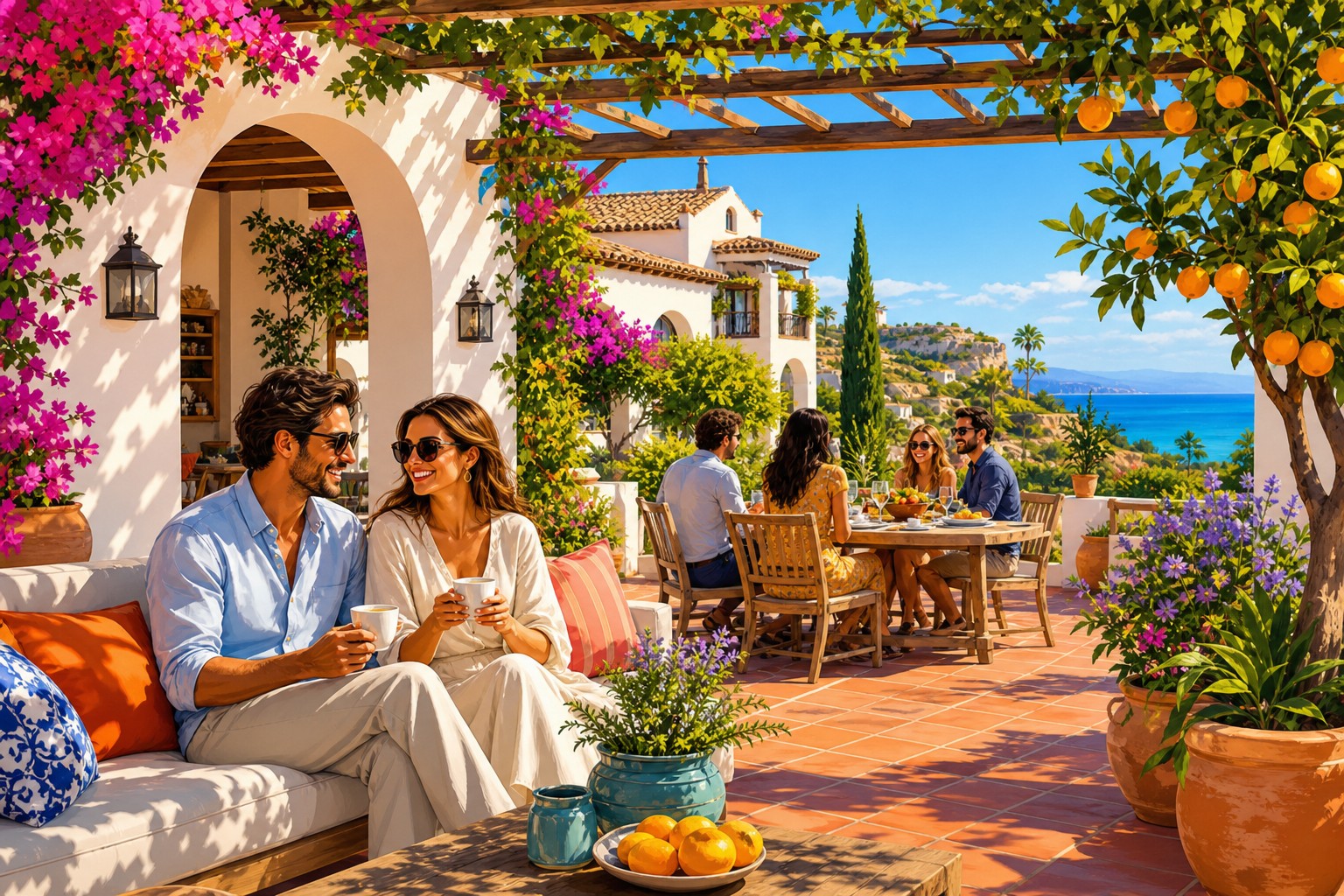
For many people, the attraction of owning a home in Spain is not simply having another set of rooms. It is the possibility of changing how you live each day: eating outside more often, enjoying slower mornings, welcoming friends for long lunches and making better use of the warmer months. A well-chosen Spanish property can make those routines feel natural, but the right home is not always the one with the largest terrace or the most dramatic view.
When searching for a property in Spain, it is useful to think beyond bedrooms, bathrooms and floor area. Consider how the home will support the lifestyle you actually want. Will there be comfortable shade in the afternoon? Is the kitchen close to the outside dining area? Can you move easily between indoors and outdoors? Is there enough storage for cushions, bicycles, beach equipment or gardening tools? These practical details often make a greater difference to daily enjoyment than decorative features.
This guide explores how to choose a Spanish home around outdoor living, socialising and Mediterranean-style routines, whether you are buying a permanent residence, a holiday home, a future retirement property or a flexible base for spending part of the year in Spain.
Start with the lifestyle, not the property type
Before deciding between an apartment, townhouse, bungalow or detached villa, describe how you expect to use the home. Outdoor living means something different to every buyer. For one household, it may mean breakfast on a balcony and evening drinks on a communal terrace. For another, it may involve growing herbs, cooking for extended family or having space for children and grandchildren to play.
Write down a typical day in your imagined Spanish home. Think about where you would drink your first coffee, where you would eat lunch, how guests would arrive, where you would store outdoor furniture and whether you would prefer a private garden or a shared community setting. This exercise can reveal which features are genuinely important and which are simply attractive in photographs.
A smaller property with a highly usable terrace may suit your lifestyle better than a larger home with an awkward outdoor area. Equally, a low-maintenance apartment may be more enjoyable than a private villa if you prefer travelling, spending time at the coast or avoiding regular gardening and pool care.
Understand the different forms of outdoor space
Balconies and terraces
A balcony can be extremely useful, particularly when it is deep enough for a small table and two comfortable chairs. However, dimensions matter. A long, narrow balcony may be suitable for morning coffee but less practical for outdoor meals. Check whether doors, shutters or furniture reduce the usable space when open.
Terraces often provide more flexibility, but their orientation is just as important as their size. A south-facing terrace may receive strong sunshine for much of the day, while an east-facing space can be pleasant for breakfast and morning use. West-facing areas may offer attractive evening light but can become hot during late summer afternoons unless there is suitable shade.
Do not rely solely on a viewing at one time of day. Ask how the terrace feels at different times and seasons. If possible, inspect the property during the period when you are most likely to use it, or ask practical questions about awnings, pergolas, blinds and natural shade.
Patios and courtyards
Patios can create a strong connection between the home and the outdoors, especially when they are directly accessible from the living room or kitchen. A courtyard may also provide more privacy than an exposed front terrace, although surrounding walls can affect airflow and natural light.
Look carefully at drainage, paving, wall finishes and planting. Outdoor surfaces can become slippery, stained or difficult to maintain if water does not drain effectively. Mature planting may look appealing, but it is worth understanding how much irrigation, pruning and seasonal care it requires.
Gardens and private plots
A garden can provide privacy, space for outdoor dining and room for hobbies, but it also creates ongoing responsibilities. Ask who maintains communal landscaping, what irrigation system is installed and whether trees or hedges are covered by community rules. For private gardens, consider the likely cost of pool maintenance, watering, pruning, pest control and occasional repairs.
Garden size should be judged by usability rather than appearance. A well-designed, manageable plot with shaded seating and a practical storage area may be more valuable to your lifestyle than a much larger garden that becomes a maintenance burden when you are away.
Choose a location that supports everyday routines
A home designed for outdoor living is most enjoyable when it is also well connected to the things you use regularly. Consider how far you will travel for food shopping, healthcare, cafés, beaches, public transport and social activities. A beautiful property may feel less convenient if every simple errand requires a car.
Buyers who want coastal routines may prioritise walking access to the seafront, while others may prefer a quieter inland setting with more privacy and larger plots. Think about noise at different times of day, parking during busy periods and whether the neighbourhood remains active outside the main holiday season.
For example, people considering a home around the southern Costa Blanca can compare different types of setting by browsing properties for sale in Torrevieja. The town offers a variety of established residential areas and property formats, so buyers can assess whether a more central, coastal or quieter residential routine suits them.
It can also be helpful to compare the atmosphere of a traditional inland community with a more purpose-built residential area. The best choice depends on whether you want a strong local rhythm, a large international community, convenient amenities or a balance between privacy and social connection.
Think carefully about shade and summer comfort
Shade is one of the most important features of a Spanish outdoor space. A terrace may look impressive in bright photographs, but it needs protection from strong sunshine if you want to use it for meals, reading or relaxed conversation.
Look for fixed covered areas, retractable awnings, pergolas, shutters, mature trees or the potential to install suitable shading. Ask whether any proposed alteration would require community approval or local permissions. These requirements can vary according to the property, building and municipality, so buyers should obtain professional advice before carrying out work.
Ventilation also matters. A covered terrace with no airflow can become uncomfortable, while a slightly more open design may feel pleasant when positioned to catch a breeze. Indoors, cross-ventilation, external shutters and sensible window placement can help the whole property feel more usable during warmer periods.
When viewing, pay attention to the direction of the sun and the temperature of internal rooms. A bright home is attractive, but excessive afternoon heat may affect how often you use certain spaces. Ask about air conditioning, insulation, window glazing and the age and condition of installed equipment.
Plan the kitchen and dining areas around real use
Outdoor living often revolves around food. A practical Spanish home should make it easy to carry meals, drinks and crockery between the kitchen and terrace without navigating narrow corridors or multiple steps.
Look at the position of the main kitchen, utility area and outdoor dining space. If you hope to entertain, consider whether there is enough worktop space, storage and refrigeration. A small outdoor kitchen or barbecue area may be attractive, but check its condition, ventilation, water supply and any restrictions that apply to cooking installations.
It is also worth thinking about washing up, rubbish storage and cleaning. A beautiful terrace can become frustrating if there is nowhere to store serving dishes, outdoor cushions or tableware. A utility room, lock-up store or discreet external cupboard can be surprisingly valuable.
Large gatherings are not essential for enjoying outdoor living. Even a modest terrace can support a relaxed lifestyle if there is room for a small table, comfortable seating and useful lighting. Focus on creating a space you will use frequently rather than one designed only for occasional entertaining.
Balance privacy with a sense of community
Privacy is a common priority for property buyers, but complete isolation is not always the most enjoyable arrangement. Many people value having neighbours nearby, particularly when they use their Spanish home part time or are building a new social network.
Look at sightlines from neighbouring balconies, adjoining gardens, roads and communal areas. Screens, planting and pergolas can improve privacy, but they may require approval in a managed development. Listen for traffic, pool activity, nearby businesses and other sources of noise during both daytime and evening.
Communal developments can offer attractive shared facilities and easier maintenance, but they also involve community fees, rules and collective decisions. Read the available community information and ask about planned works, reserve funds, recurring charges and restrictions affecting terraces, pets, alterations or external furniture.
Buyers who are comparing quieter residential areas near established amenities may wish to explore homes for sale in Rojales. Looking at the available property formats can help clarify whether you prefer a private garden, shared facilities, a townhouse layout or a more compact home that is easier to manage.
Make storage part of the buying brief
Storage is easy to overlook when a property is presented with minimal furniture. In everyday use, however, Spanish homes often need space for outdoor cushions, folding chairs, parasols, bicycles, beach items, tools, cleaning equipment and seasonal belongings.
Check built-in wardrobes, utility cupboards, under-stair spaces, roof areas, garages and external storage rooms. If the property has a communal garage or basement store, confirm exactly what belongs to the property and whether access is secure and convenient.
For a second home, storage is particularly important. You may not want to transport household basics every time you arrive, and items left outside can deteriorate in strong sun or coastal air. A lockable, dry storage area can make short visits far easier.
Consider low-maintenance ownership from the beginning
Outdoor living should add pleasure rather than create a long list of jobs. Before making an offer, estimate the practical workload associated with the property. This might include pool care, irrigation, gardening, repainting, air-conditioning servicing, shutter maintenance and cleaning after periods of non-use.
Ask whether the home can be closed securely when you are away and whether a trusted person can check it periodically. Look for signs of damp, blocked drainage, cracked paving, tired sealant, damaged external paintwork or corrosion to railings and fittings.
If you are buying from abroad or planning to spend only part of the year in Spain, create a realistic ownership plan. Include regular inspections, utility management, emergency access and arrangements for repairs. The most suitable property is often the one that remains manageable when life becomes busy or travel plans change.
For buyers considering a coastal lifestyle with practical access to beaches, shops and outdoor activities, it may be useful to compare homes available in Guardamar del Segura and surrounding search areas. A broad search can help you compare apartment terraces, townhouses and villas before narrowing down your preferred type of outdoor space.
Use viewings to test the lifestyle
During a viewing, do more than walk from room to room. Open the windows, step onto the terrace, sit where the dining table would go and imagine carrying shopping from the entrance to the kitchen. Check whether there is enough room to move comfortably around outdoor furniture.
Ask practical questions such as:
- How is the terrace or garden normally maintained?
- Which areas receive sun and shade at different times?
- Are awnings, pergolas or external screens permitted?
- What storage belongs exclusively to the property?
- Are there community rules affecting outdoor furniture, barbecues or planting?
- How are water, electricity and pool-related costs managed?
- What happens when the property is empty for several weeks?
It is sensible to arrange independent legal and technical checks before committing to a purchase. General property information cannot replace advice based on the specific home, its documentation, its community arrangements and your personal circumstances.
Make the home work in more than one season
Although outdoor living is often associated with summer, a well-planned Spanish home can be enjoyable throughout the year. Look for a covered area that remains usable during cooler evenings, good natural light in winter and interiors that are comfortable when doors and windows are closed.
Flexible furniture, outdoor heaters where appropriate, weather-resistant fabrics and practical lighting can extend the useful season. Indoors, a living room that opens directly onto a terrace can still provide a strong connection with the outside during less settled weather.
If you expect to relocate permanently, consider how your needs may change. A property that works for long lunches and beach days should also provide comfortable living space, manageable running costs and suitable access for the future. Lifestyle planning is most successful when it includes both present enjoyment and longer-term practicality.
Work with a clear and personal brief
The most effective property search usually begins with a short list of non-negotiables. These may include a usable outdoor area, a particular orientation, walkability, low maintenance, private parking, a lift, storage or access to communal facilities.
Separate essential requirements from features that would simply be pleasant. This prevents attractive photographs from distracting you from the practical details that will shape everyday ownership. It also makes it easier to compare properties honestly when no home meets every preference perfectly.
RB Casas can be part of that research process by helping you review the types of property available through the website and by giving you a clearer starting point for your search. If you would like to discuss your requirements, you can contact RB Casas about finding a home in Spain.
Conclusion: choose the home you will actually use
A Spanish home for relaxed outdoor living does not need to be enormous, newly built or filled with expensive features. It needs to support the routines that matter to you. The most valuable qualities may be a shaded terrace, a practical kitchen connection, secure storage, comfortable access, manageable maintenance and a location that makes daily life easier.
Take time to understand how the property feels at different times of day, how much care it will require and whether the surrounding area suits your preferred rhythm. Compare outdoor spaces by usability rather than visual impact, and consider how the home will work for holidays, longer stays or permanent living.
With a clear lifestyle brief and careful viewing process, it becomes easier to find a Spanish property that is not merely attractive on arrival, but genuinely enjoyable to own and use throughout the year.
To discuss your property requirements: Contact us.